

qathet film society presents
3 Ears Indigenous Film Festival
Nirilaurta: Let Us Eat
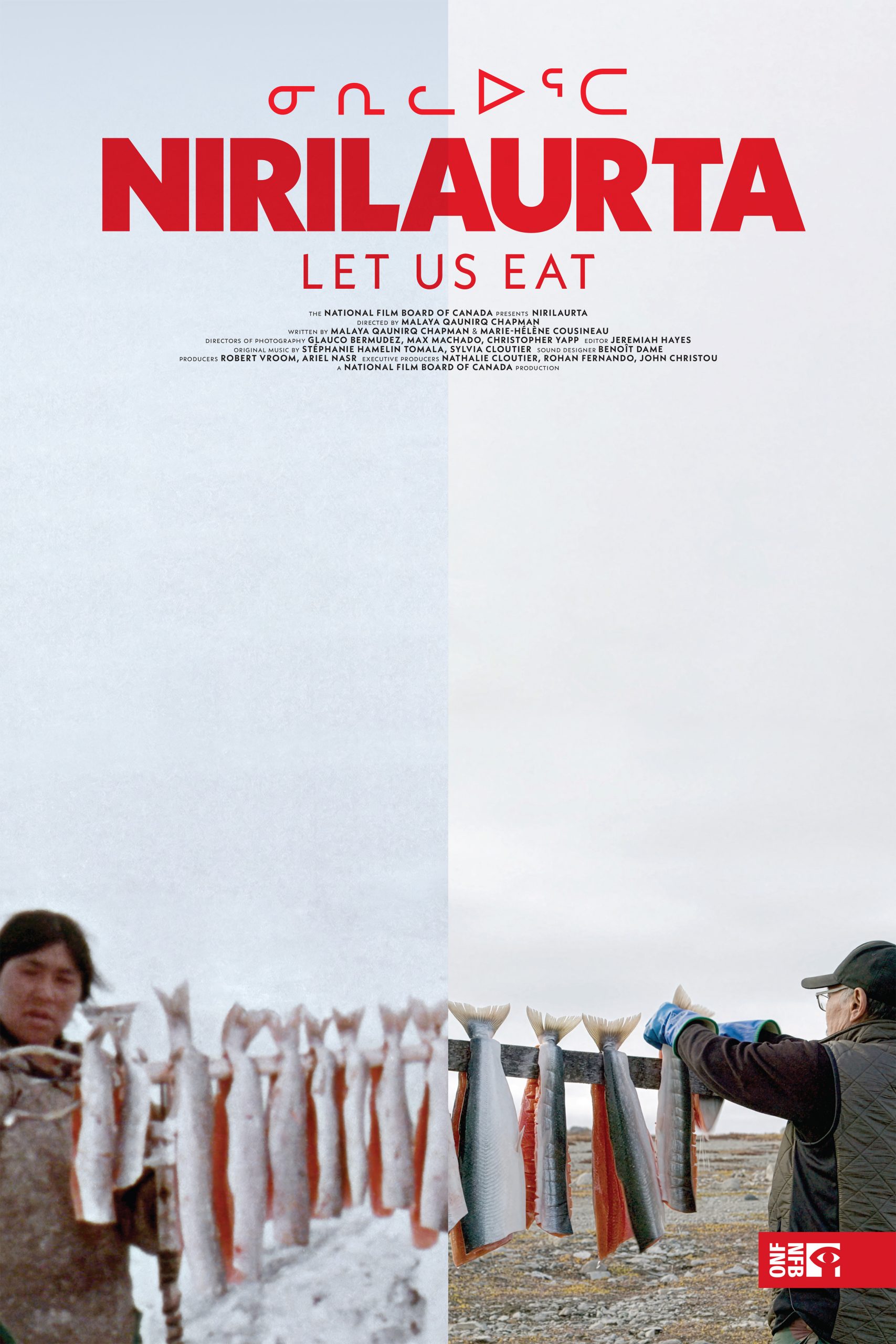
Nirilaurta: Let Us Eat
Monday September 28 – 7pm
Directed by: Malaya Qaunirq Chapman
Genre: Documentary
Language: Inuktitut and English, with English subtitles
Rated G – 52 min
Released: 2025
Following the screening, panel discussion:
Moderator Emma Morgan-Thorp
Denise Smith, Tla’amin Nation Lands & Resources Director
Logan Gaudet, Tla’amin Nation ʔɛɬtanmot ʔayɛ (Traditional Food House) Summer Student
On the edge of the Arctic Ocean, the Inuit community of Taloyoak, Nunavut, is fighting to feed its families. Soaring prices at the grocery store and the prohibitive costs of hunting and travel within the North force many homes to go hungry. Harvesting traditional foods from the land is central to Inuit culture and has kept families fed for countless generations. Sharing foods with relatives and neighbours is an essential part of life here that strengthens bonds and supports those most in need.
Nirilaurta weaves together archival and contemporary scenes of Inuit life, a rich thread of traditions and connections that shows the continuous throughline of Inuit culture from past to present. From breathtaking landscapes to intimate meals around the table, the beauty of Arctic life shines through as food brings together family, neighbours and community. After more than four years of work, Inuk filmmaker Malaya Qaunirq Chapman premièred her first documentary, Nirilaurta: Let Us Eat Aug. 6, 2025 at the International First Peoples Festival in Montreal.
The documentary focuses on Taloyoak through the experiences of the Ugyuk family as they fish, hunt and prepare meals and gather around the table. It also examines how rising costs affect every aspect of life in the North. People across Canada know grocery prices are high, Qaunirq Chapman said, but that’s not the entire picture. Beyond expensive groceries, Qaunirq Chapman said the equipment needed to harvest country food — fuel, ammunition, warm clothing and hunting gear — has become increasingly difficult for families to afford. Qaunirq Chapman, who is from Iqaluit but now lives in Kuujjuaq, said she felt it is important to see northern issues explored from the point of view of northerners.
“There are so many documentaries that tell Indigenous stories from a western mindset. You cannot tell an Indigenous story authentically unless you’re an Indigenous person,” she said. For her, access to food is personal. Raised by her great-grandmother in Nunavut, she remembers growing up with these challenges before later living in Los Angeles, where she witnessed a very different relationship with food and abundance.