

qathet film society presents
3 Ears Indigenous Film Festival
Aki
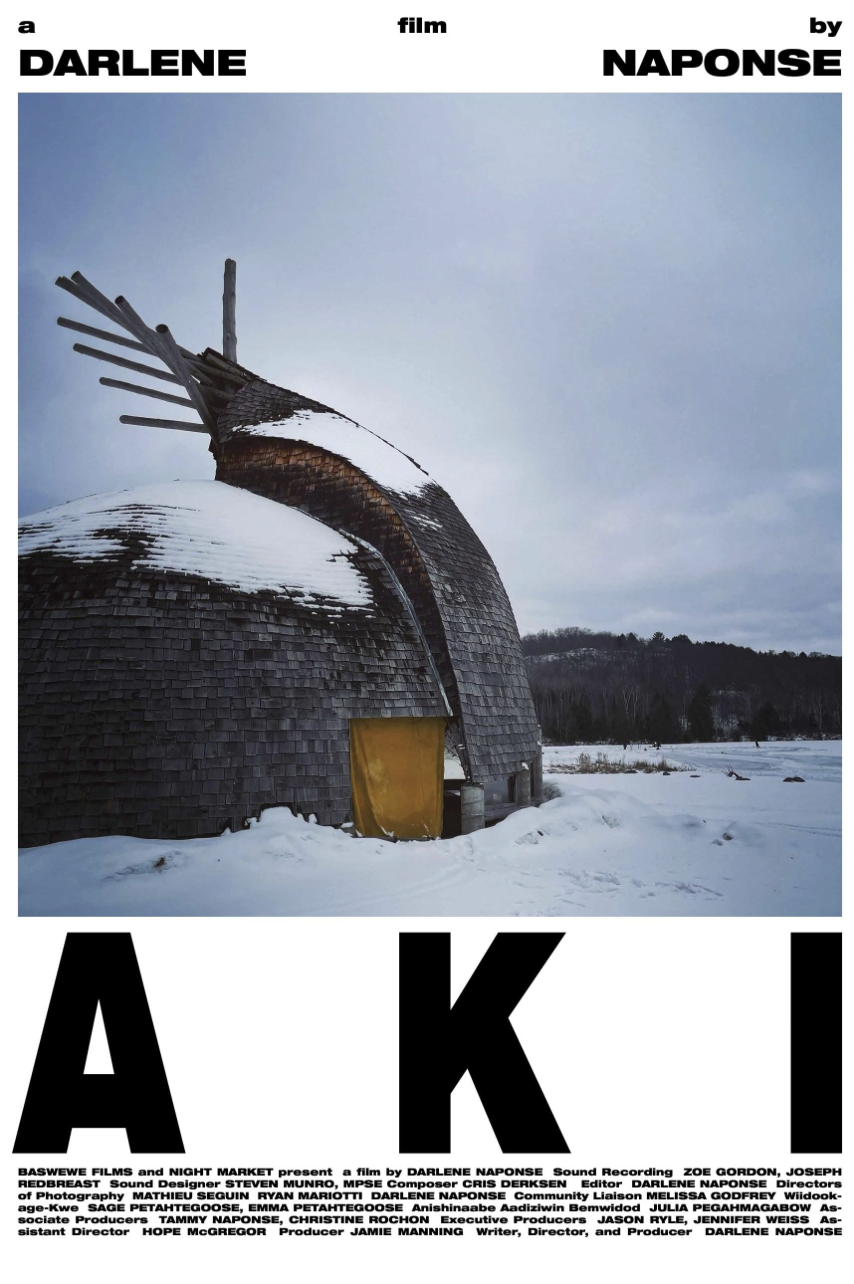
Aki
Sunday September 27 – 7pm
Directed by: Darlene Naponse
Genre: Visual Documentary
Language: Ojibwa with English subtitles
Rated G – 1hr 23min
Released: 2025
Filmmaker Darlene Naponse creates an immersive and meditative documentary of her homeland with Aki. Aki, Anishinaabemowin for “earth” or “land,” is a non-verbal, sensory immersion into Ojibway land-based life and survivance. The film was shot over seasonal years in Atikameksheng Anishnawbek in Northern Ontario, Canada and is structured around the Anishinaabe seasons – Biboon (winter), Mnookmi (spring), Niibin (summer), and Dgwaagi (autumn).
Aki is a documentary that is more of an experience than anything else, with the exact meaning of the visuals open to viewer interpretation. The film is not quite a nature documentary, but it is undoubtedly one that is connected to the land. Apart from the occasional use of split screen, director Darlene Naponse allows the images of the film to speak for themselves, accompanied by the meditative score.
At times, the camera positions us well beneath the tree line, leaving us to observe the gentle movements of the mighty branches swaying with the wind. At other times, Naponse brings us high above the greenery, making them appear smaller yet plentiful. When Niibin hits, a macro lens shows off the glorious detail within the forests, from the blossoming of flowers to the drops left on long blades of grass after a rainfall.
Taking these scenes together, Aki emphasizes nature’s expansiveness: many of the trees, lakes, and fields existed well before our lifetime and will continue to exist when we’ve long gone. No matter how imposing our existence and actions are to the land, we merely exist as its caretakers. But as caretakers, we have been given the gift of life, family, joy, and community — the other side of Naponse’s film.
Aki invites us into the lives of the people of Atikameksheng. From inside a cozy kitchen where 1950s-era Elvis Presley magnets adorn the fridge and rabbit stew bubbles away on the stove to hands harvesting birch sap on crisp snowy days, Naponse brings to her audience the vibrancy of her community. A beautiful powwow caps off Niibin, and Naponse once again utilizes the multi-angle approach allowing us to revel in the connection and beauty of tradition.
Naponse’s film is a stellar act of endurance that acknowledges not only the land at its centre, but the fact that certain things may present themselves as unwielding constants, but are never not contestable. This is why a shot of a forest beyond chopped to stumps one by one is immediately followed by a group of boys gathered to play pickleball on the same square of pavement that was a basketball court 20 minutes prior. It’s why a clump of gray pinecones withering away by the hour is almost immediately succeeded by the blaze of a campfire, a group of hunters gathered around it for warmth from both the flames and one another. No matter what’s on screen, it can be trusted that everything remained as it was meant to remain, unmeddled with by the visual artists at work here. That the same can’t necessarily be said about the land Aki depicts, and others like it, is just another reason to acknowledge its existence.